
When questioning an AI tool, one anticipates an appropriate response; whether it’s Perplexity or ChatGPT, both fulfill this function, but in a different manner. Perplexity revolves around web search and providing resources, while ChatGPT serves as a multi-purpose AI application for writing, coding, and various creative activities.
So, let’s take a look at the Perplexity Vs ChatGPT comparison in terms of their features, pricing, uses, and restrictions.
Perplexity Vs ChatGPT: Short Comparison
Both Perplexity and ChatGPT can respond to questions, perform a web search, and assist people with their tasks. However, they serve two different purposes regarding their focus areas.
| Feature | Perplexity | ChatGPT |
| Developer | Perplexity AI | OpenAI |
| Popular for | Web research, source discovery, and current information | Reasoning, coding, writing, and creative work |
| AI models | Perplexity models and selected third-party models | OpenAI models |
| Search experience | AI search with citations and source links | Web Search with current information and source links |
| Research tools | Pro Search and Deep Research | Deep Research and Web Search |
| Free tier | Yes, with usage limits | Yes, with usage limits |
| Paid plans | Pro starts around $20/month, with higher tiers available | Multiple tiers, beginning around $20/month |
Perplexity Vs ChatGPT: Core Features Compared
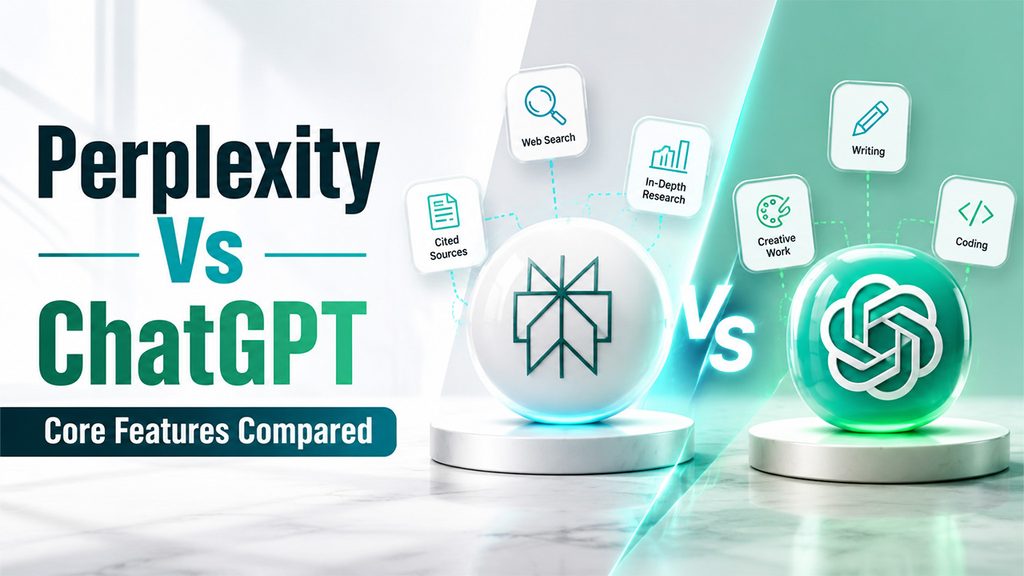
The easiest way to understand the difference is to look at how each platform handles common tasks.
Perplexity
Perplexity puts search first. You enter a question, and the platform searches relevant online sources before creating an answer. You can then open the cited sources to check the information yourself.
Its Pro Search feature is useful when a question needs more than one search. It can look through different sources and combine the findings into a single response. Perplexity also offers Deep Research for more detailed topics. Instead of giving you a short response, it can investigate a subject across multiple sources and produce a longer report.
Another feature that makes Perplexity different is its model selection. On supported plans, users can access models from providers such as:
- OpenAI
- Anthropic
- Perplexity
The exact models available can change as the company updates its plans. If you’re considering Perplexity for regular research, it’s worth looking beyond its free version. Our Perplexity Pro review covers its features, pricing, usage limits, and what you get with the paid plan.
ChatGPT
ChatGPT takes a wider approach. You can use it for research, writing, coding, brainstorming, file analysis, and creative work without moving between several different platforms. If you’re also comparing ChatGPT with Google’s AI assistant, you can read our detailed ChatGPT vs Gemini comparison to see how the two platforms differ in features, capabilities, and everyday use.
Its main features include:
- Web Search: Finds current information online and provides source links
- Deep Research: Handles longer research tasks using multiple sources
- File Analysis: Helps analyze and work with uploaded documents and data
- Image Generation: Creates images from written instructions
- Voice: Lets you interact with ChatGPT through voice conversations
Deep Research is particularly useful for detailed questions. It can use public websites, uploaded files, and supported connected apps to build a structured report with citations. This wider range of tools makes ChatGPT useful when research is only one part of the job.
Perplexity Vs ChatGPT: Which Is Better for Different Tasks?
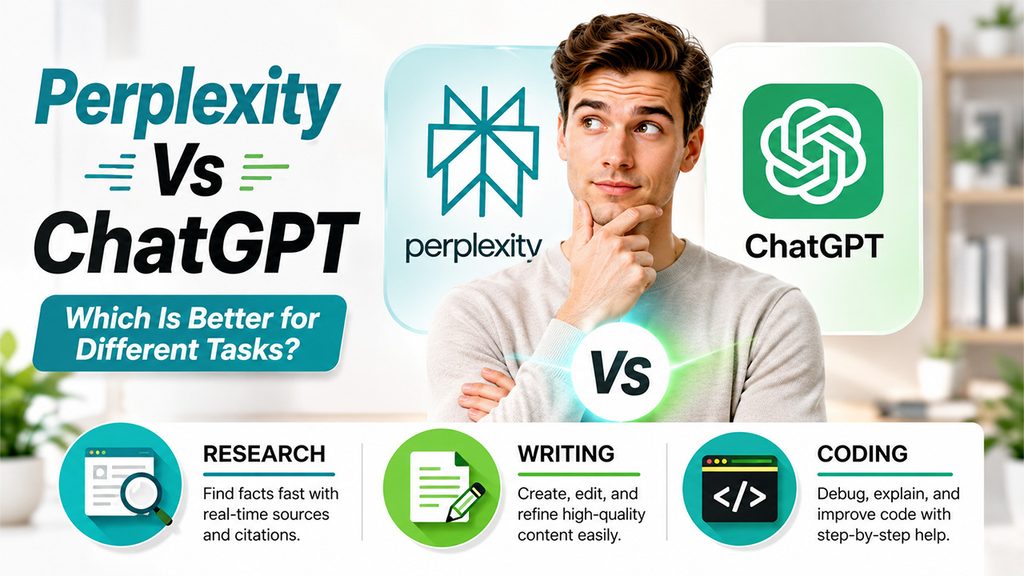
Neither platform wins every category. Your choice depends on the work you need to complete.
For Research
Perplexity has a natural advantage when you need to find information quickly and see where it comes from.
For example, if you’re comparing CRM platforms, you can ask Perplexity to research pricing, features, and recent updates. The citations give you a starting point for checking the information.
For Writing
ChatGPT is a better fit when research turns into content. You can give it your research, create an outline, write a draft, and then ask for several rounds of editing. You don’t have to start a new workflow for every change.
ChatGPT isn’t the only AI tool worth considering for writing and creative work. If you’re comparing it with Anthropic’s Claude, our Claude vs ChatGPT comparison looks at how the two tools differ.
For Coding
Both platforms can help with code, but ChatGPT is useful when the task involves a longer conversation. You can paste an error, discuss what caused it, ask for a fix, and then test another approach. The conversation can continue as you work through the problem.
Limitations of Perplexity and ChatGPT
AI tools can make your work faster, but neither one should be treated as a source of unquestionable truth.
Perplexity Limitations
Perplexity’s search-first approach is useful for research, but it may not be the most convenient option for a long creative project involving repeated writing and editing. There are also plan restrictions. Some advanced features and model choices depend on your subscription, and the available models can change over time.
Most importantly, citations don’t automatically make an answer accurate. A source may be relevant but still not support the exact claim made in the answer. You should open the original page when the information matters.
ChatGPT Limitations
ChatGPT has a similar problem. Its answers can sound confident even when something is incorrect. Search can improve access to current information, but it doesn’t remove the need for fact-checking. OpenAI also recommends reviewing sources when using Search for important information.
Some advanced features also have usage limits based on your plan. Deep Research, for example, has different usage allowances across subscription levels. So, don’t judge either tool by how convincing the answer sounds.
Conclusion
It is hard to decide who wins in the competition of Perplexity Vs ChatGPT. Perplexity is the best platform to use for people who do a lot of web searching, researching their sources, and wanting to discover the newest information. ChatGPT is ideal if someone needs a multilingual assistant for writing, coding, analysis, brainstorming, and research purposes.
Both platforms share some flaws and can provide incorrect information; therefore, the need for fact-checking remains important. There’s no need to struggle choosing one tool: with Perplexity for research and ChatGPT for writing and analysis, one can work successfully.
Frequently Asked Questions
Q1. Is Perplexity superior to ChatGPT for carrying out research?
A – Perplexity is an excellent platform for research due to its integration of web searches and citation. However, ChatGPT has integrated Searching and Deep Research functionalities meaning that either may be better depending on the kind of research task to be carried out.
Q2. Is Perplexity more accurate than ChatGPT?
Not at all. Both platforms produce their fair share of misinformation, but Perplexity’s strength lies in making the sourcing process simpler for the users. Still, it is always recommended to check the original source of information before putting your faith in it.
Q3. Does ChatGPT have access to the internet?
Yes, ChatGPT can carry out searches, find current information, and offer plenty of links to relevant resources. It also includes Deep Research features for more in-depth investigations.
Q4. Which AI has the advantage in writing?
ChatGPT is believed to be a more suitable tool for writing than its competitor, since it allows you to draft, rewrite, and edit different types of content.
Q5. Can I use Perplexity and ChatGPT together?
Yes. You can use Perplexity for research and source collection, then use ChatGPT for writing, editing, brainstorming, or analyzing the information. This approach can work well when your task involves both research and content creation.