Social media marketing has always relied on one thing only, which is recognizable and consistent face that audiences can rely on. Today, this face does not have to be human. An AI influencer can be defined as a computer-generated persona created to appear, speak, and interact precisely like an actual content creator, minus the production costs, scheduling conflicts, and unpredictability that is a product of a human talent. Agencies, brands, and solo creators are extensively turning to an AI influencer for a quicker and more controllable way to establish a presence across TikTok, Instagram, and YouTube.
This shift is not just a passing trend. It showcases a wide move toward automation in production of content, where marketers need speed, consistency, and scale without sacrificing quality.
What Is an AI Influencer?
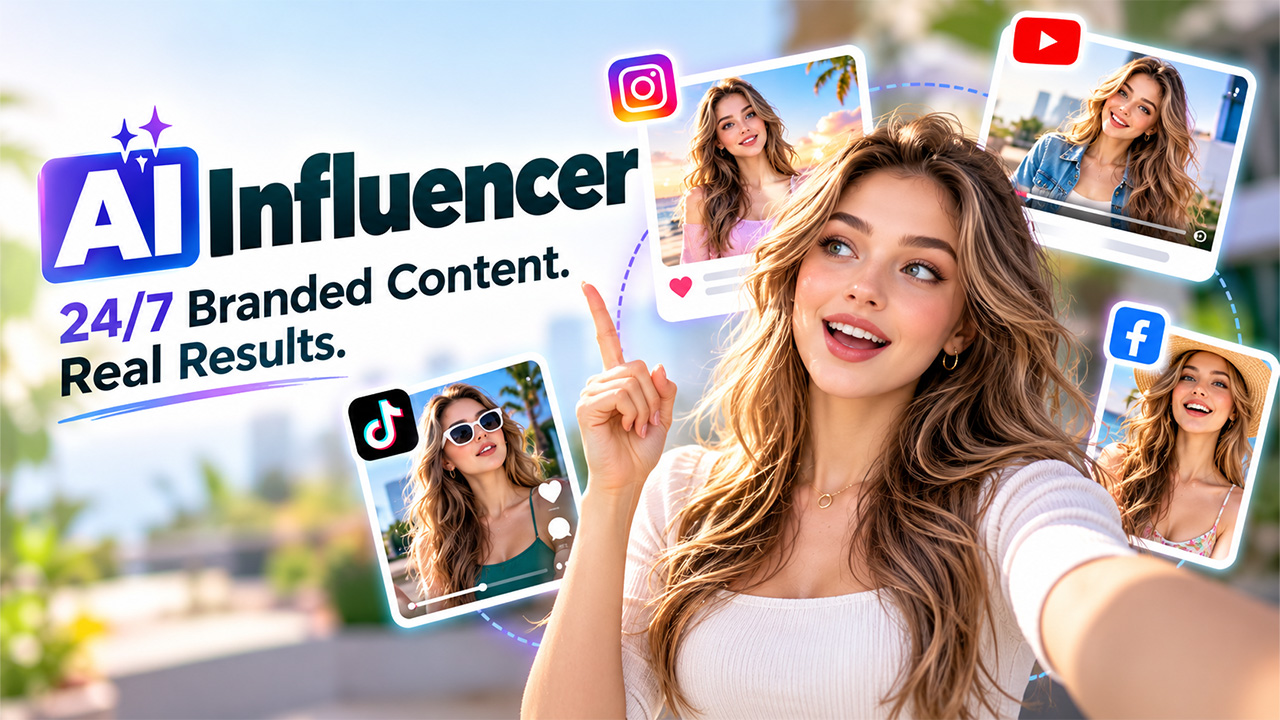
An AI influencer can be defined as a virtual persona generated through AI tools that lead to lifelike videos, images, and voice content of a digitally cloned or fictional individual. Contrary to one-off AI-driven image, an AI influencer ensures that the same body, face, and personality across each post, provides audiences a consistent character to follow, which is very similar to a real creator.
There are mainly two ways to create one:
- Creating a totally original persona by choosing traits like appearance, age, and style.
- Cloning the likeness of a real person (with appropriate consent) to generate a digital version of themselves for scaled production of content.
Once you have locked in the identity, you can place the same persona into unlimited outfits, scenes, and scripts, enabling brands to create weeks of content in just a matter of hours.
Why Businesses Are Using AI Influencers?
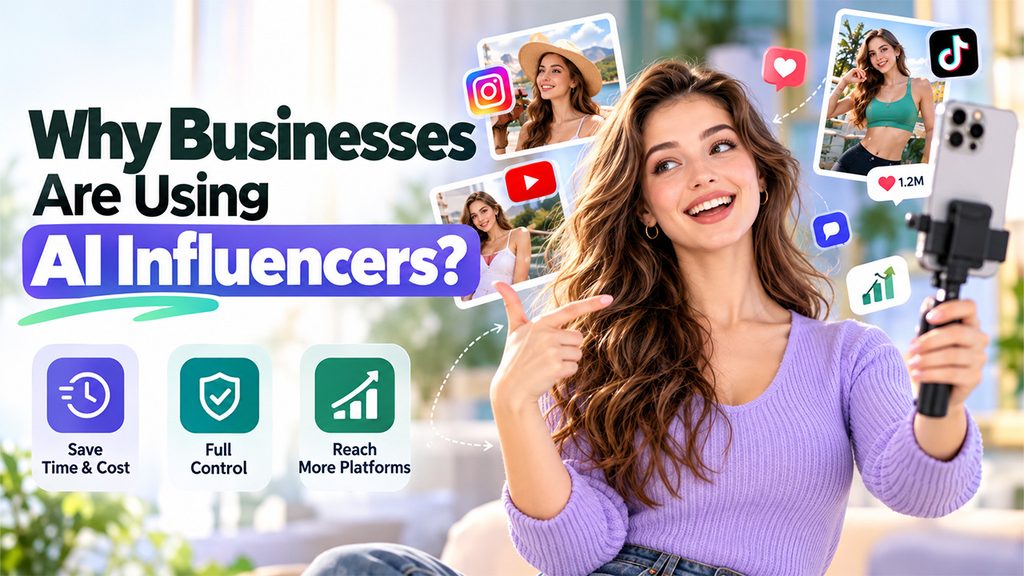
The need for an AI influence goes well beyond novelty. For marketing teams exploring different campaigns, it solves numerous practical production issues all at once.
Time and Cost Efficiency:
- No studio bookings, photoshoots, or travel expenses.
- Content can be created within a few minutes instead of just weeks.
- You can reutilize one persona across dozens of different campaigns without having to renegotiate the usage rights.
Control and Consistency:
- The same tone and face come up in each piece of content.
- Messaging remains on brand without relying on the availability of a third-party creator.
- Campaigns can be instantly adjusted without any reshoots.
Scalability across Different Platforms
- One AI influencer can create content for TikTok, Instagram Reels, YouTube Shorts, and premium advertisements simultaneously.
- You can localize the scripts using ChatGPT or Perplexity into different languages while ensuring the same visual identity.
For teams that already depend on an AI Content workflow to remain up to date with publishing calendars, including a virtual person is a natural extension of the same automation-based approach.
How Can You Create and Use an AI Influencer?
Building an AI influence often follows a simple production pipeline, even though the core technology is advanced:
- Persona design – The creator determines the appearance of the influencer, either through guided selection of traits or by training a model on actual photographs.
- Content generation – Once the identity is locked, images and video clips are generated from text prompts or scripts, keeping the same face and style throughout. To create this script, teams also depend on the AI Script Generator.
- Voice and motion – Talking videos are created through voice creating and lip-sync, enabling the personal to give you lines in a camera-ready and natural manner.
- Testing and Publishing – The completed assets are exported as well as published across different social platforms, typically with numerous script or visual variations tested against one another.
This is exactly where a synchronized AI Avatar Gen capability becomes crucial, since avatar creation is the main step that ensures that the identity of the AI influencer remains stable across each new piece of content. Organizations that already leverage an AI Video generator for other assets in marketing typically find it simple to extend the same infrastructure toward a complete virtual person, instead of adjusting a standalone and separate tool.
What Are the Key Considerations Before You Create One?
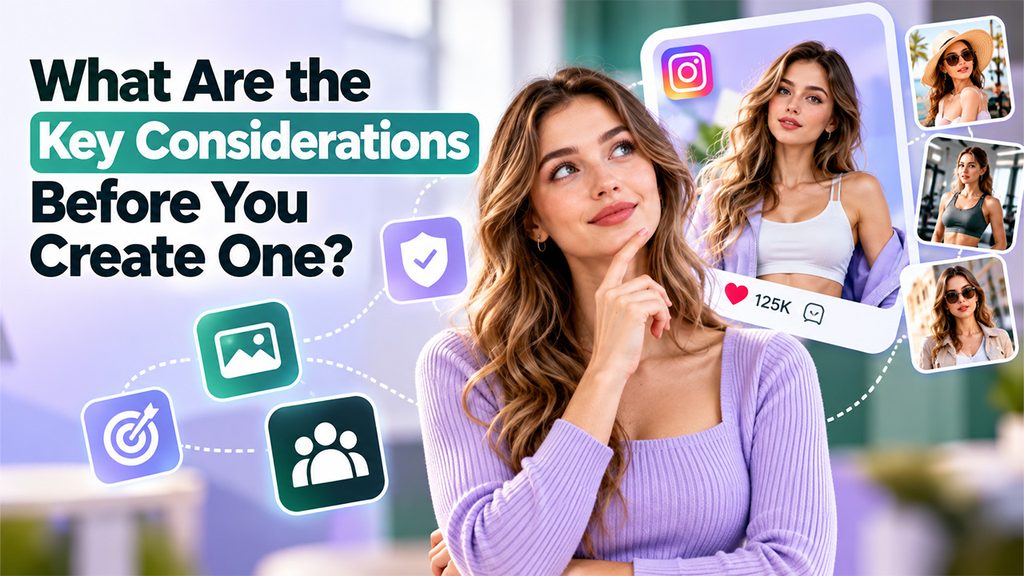
While the advantages are considerable, an AI influencer becomes an excellent strategy when it is approached thoughtfully:
- Disclosure Is Important: Audiences often respond more effectively when brands become transparent about AI-powered personas instead of presenting them as real people.
- Changes in Visual Quality: Not all platforms ensure consistent facial features across different scenes, so checking the quality of output before you commit to a persona is significant.
- Niche Fit is Important: AI influencers are widely preferred in industries such as education, fashion, fitness, e-commerce, and brand spokesperson roles, where a recognizable face is compatible with the message instead of replacing genuine expertise.
- Ongoing Support for Content Requirements: Consistent posting needs a steady pipeline of visuals, scripts, and edits, which is where a wider AI Image and content creation workflow aids in ensuring momentum.
Marketers that experiment with this format typically begin small, experimenting with one persona on a single platform before scaling it across different channels once engagement data has confirmed that the approach is working.
Conclusion
The growth of the AI influencer showcases a major shift in how digital marketing content is created: more controllable, faster, and less reliant on external variables. For organizations managing multiple campaigns or brands, a virtual persona provides an easier way to maintain a consistent voice while significantly reducing production time. As video creation, avatar generation, and automated content platforms continue to evolve, resources such as 9 Best AI Voice Agents for Businesses in 2026 also highlight how AI is expanding beyond visual content into business communication and customer engagement. AI influencers may soon become a standard part of the modern marketing toolkit rather than an experimental add-on. Teams that explore these technologies early, supported by integrated content and AI chat workspaces, can strengthen their social presence without significantly increasing production overhead.
Frequently Asked Questions
What is an AI influencer?
An AI influencer refers to a computer-generated personal leverage to create videos, images, and voice content for marketing and social media without recruiting human talent.
Is it costly to build an AI influencer?
No. When you compare with influencer partnership and traditional photoshoots, an AI Influencer is considerable cheaper since a single persona can be reutilized across unlimited volume of content.
Do I require technical background to develop an AI influencer?
Not exactly. Most platforms are provided with guided persona builders, so no advanced design experience or coding is needed.
Should brands be transparent about the fact an influencer is AI-generated?
Yes. It is advisable to be more transparent about utilizing an AI influencer since it establishes more trust with audiences than fake-presenting it as a real person.
Which industries are AI influencers more suited for?
Fitness, fashion, e-commerce, and education brands get the most results from AI influencers. Having a consistent face helps their branding without requiring a real person in front of the camera.