
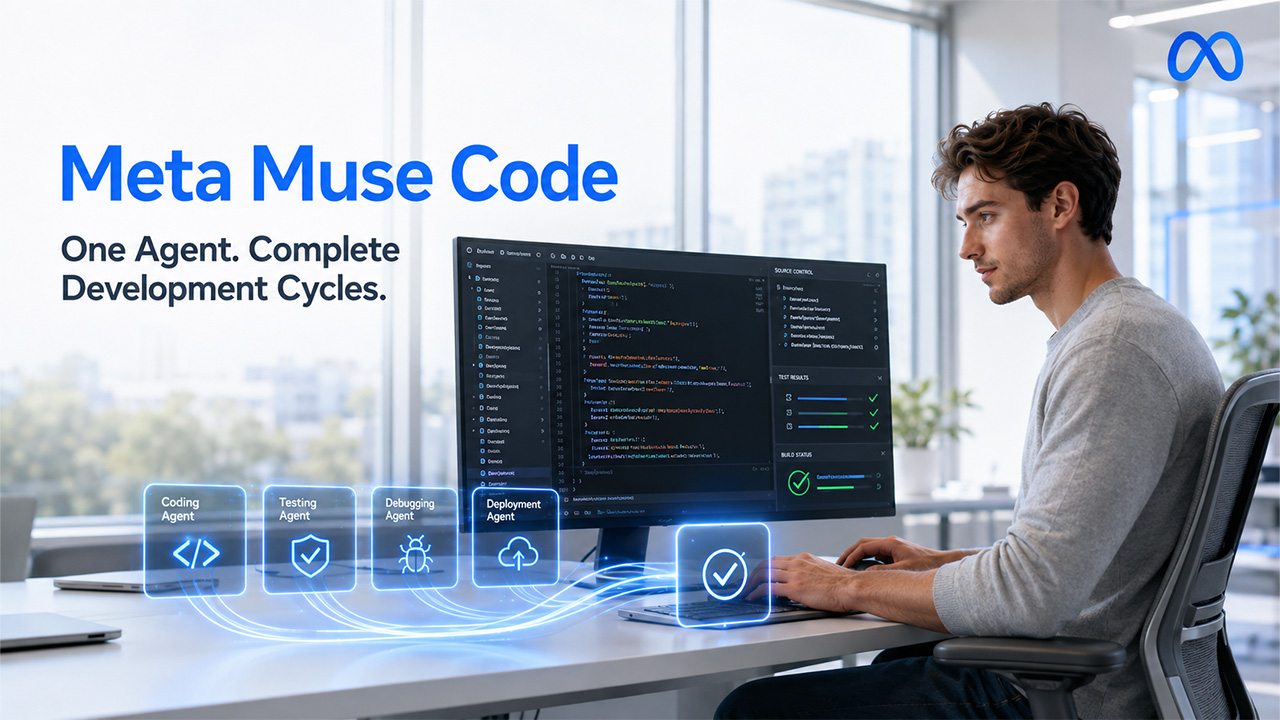
With the growing advancement of artificial intelligence technology, it is rapidly transforming the way developers build software. In this regard, Meta has officially introduced its AI coding assistant, Muse Code. The platform is designed as a terminal-native AI coding agent, which is powered by the latest Muse Spark 1.2 model. The platform aims to automate complex software engineering workflows, while also helping developers stay productive across a larger codebase.
The beta launch of the platform reflects the growing focus of Meta on agentic AI, a system that is capable of planning, executing, and validating tasks with minimal human intervention. If you’re new to this concept, check out our guide on AI Agents Explained for Beginners to understand how autonomous AI agents work.
What is the Muse Code by Meta?
Unlike any traditional AI coding agent, Muse Code is purposefully designed to function as an autonomous software engineering agent. Through the platform, developers can interact with the terminal of the assistant, where it can understand large repositories, make code changes, execute commands, run tests, and iterate continuously until the tasks are completed.
The platform is built on Muse Spark 1.2, the latest reasoning model of Meta, which is optimized for coding and long-horizon software development tasks. The platform continues working through multiple stages of development, rather than stopping after generating code, making it suitable for real-world engineering projects.
Key Features of Muse Code
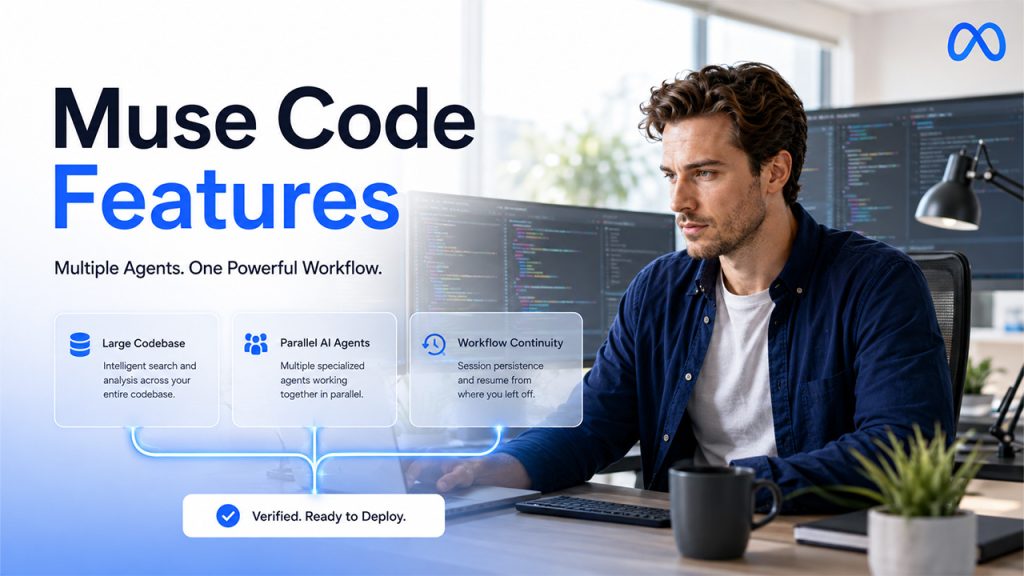
Muse Code by Meta offers various key features, which include:
- Built for Larger Codebases
The platform is engineered to navigate thousands of files and complex dependencies efficiently, allowing developers to assign broader engineering tasks.
- Parallel AI Agents
Each agent of the platform works independently in an isolated environment before combining results, ensuring faster execution of complex projects without interfering with the primary codebase.
- Local Terminal Experience
The platform fits naturally into existing developer workflows, allowing engineers to continue using Git, testing frameworks, package managers, and deployment tools without switching to a browser-based interface.
- Persistent Workflow Management
Muse Code allows developers to resume unfinished work after interruptions, making it practical for lengthy development tasks.
What This Means for Developers

The introduction of Muse Code reflects a broader industry shift towards AI software engineering agents that are capable of handling complete development cycles, rather than isolating coding tasks.
As the system continues to mature, it is sure that developers will increasingly rely on AI for planning features, implementing code, validating changes, writing tests, and resolving bugs. It will also allow engineers to focus more on architecture, product strategy, and complex decision-making.
While human expertise remains an essential component for system design, security, and business logic, platforms like Muse Code demonstrate how AI is sure to play a crucial role as an active collaborator within modern software development.
Conclusion
The launch of Muse Code by Meta marks a major step in the evolution of AI-powered software development. As Meta continues expanding its AI ecosystem, this launch further strengthens the company’s position in the AI industry. For more updates on the latest Meta AI news, explore our related articles.
The platform combines autonomous task execution, along with advanced reasoning and seamless integration with existing developer workflows. The platform also has the potential to improve productivity and streamline complex engineering projects. While AI is highly unlikely to replace skilled human developers, tools like Muse Code are set to become valuable collaborators in the sector, helping engineering teams build, test, and deliver software more effectively.
Frequently Asked Questions :
What is Muse Spark 1.2?
Muse Spark 1.2 is the latest AI reasoning model by Meta that is optimized for coding, software engineering workflows, and long-horizon development tasks.
Does Muse Code support parallel task execution?
Yes. Muse Code supports parallel task execution. The platform can use multiple AI agents to work on different engineering tasks simultaneously, improving development efficiency.
What programming languages does Muse Code support?
Muse Code is designed for software engineering tasks across multiple programming languages commonly used in modern development environments.
Is Muse Code available to everyone?
No, currently Muse Code is not available to everyone. Muse Code has been introduced in beta, with availability expanding gradually according to Meta’s rollout plans.