
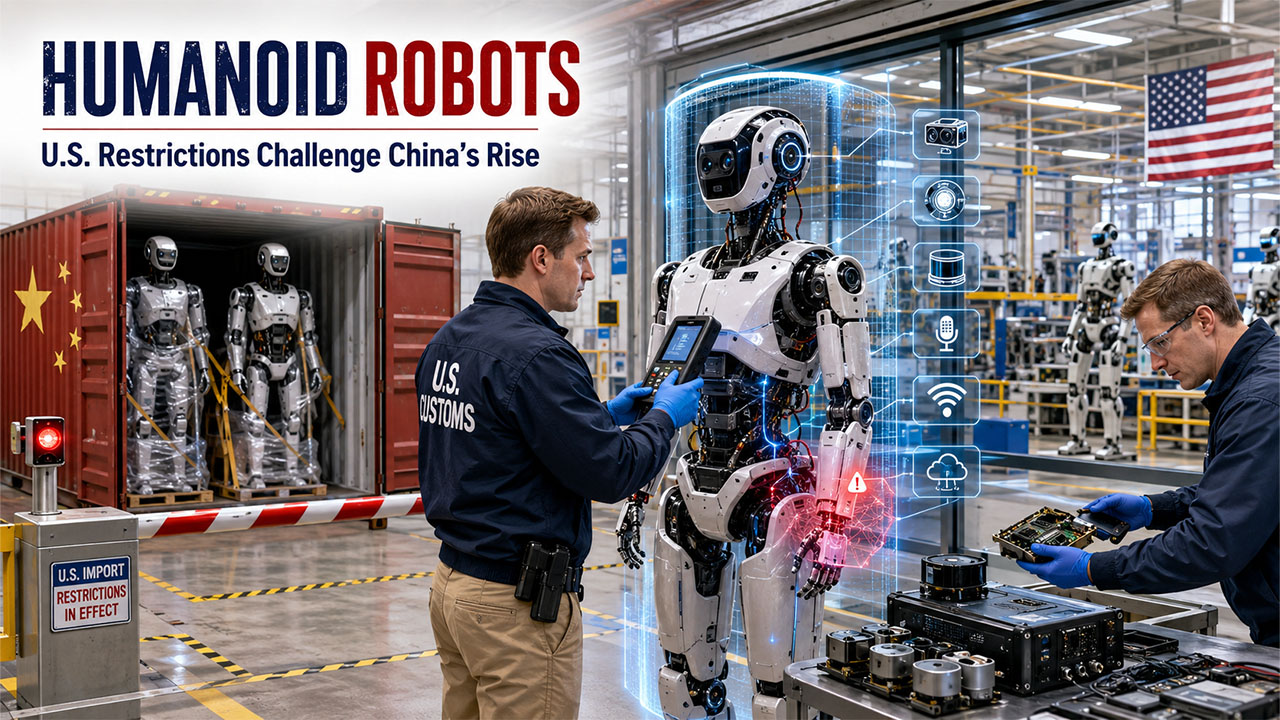
The FCC ban on Chinese Humanoid Robots reflects a growing belief that advanced robots cannot just be treated as machines, but as connected computing platforms that can collect enormous amounts of sensitive data.
The global race for artificial intelligence is not just limited to building the smartest AI models or the fastest chips. It has grown to be more about who controls the physical machines that are powered by AI. To boost its local market and challenge the growth of China in the AI race, the United States has announced fresh restrictions on the import of new Chinese-made humanoid robots. The ban also extends to various other types of robots, such as quadruped robots and connected power inverters.
Why is the U.S. Targeting Chinese Robots?
The Federal Communications Commission (FCC) stated that the restrictions are mainly intended to reduce the potential risk of cybersecurity threats posed by internet-connected robotics systems manufactured in countries that are considered strategic competitors. The officials of the departments also argue that the humanoid and quadruped robots are fundamentally different from traditional machinery and equipment, as these robots are equipped with cameras, microphones, sensors, GPS modules, wireless communications, and sophisticated AI capabilities.
The U.S. administration has also raised serious concerns about connected power inverters, which play a crucial role in solar energy systems, battery storage, and modern AI data centers. As these devices are connected to the electrical infrastructure and cloud management systems, the administration fears that they could become attractive targets for cyberattacks in any compromising situation.
Security Concerns Driving the Policy
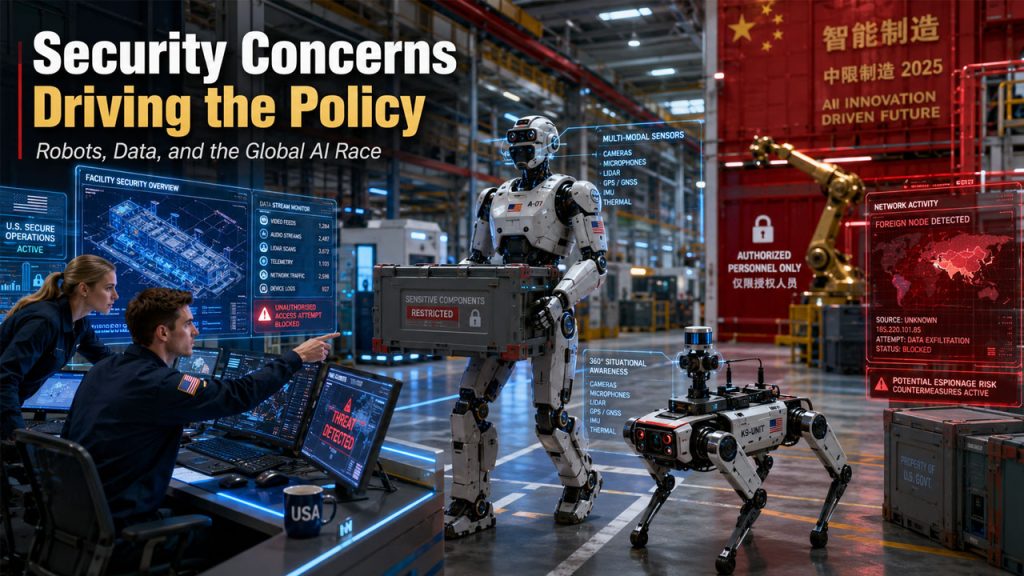
The administration stated that the AI-powered robots can eventually perform highly sensitive tasks across key sectors, such as manufacturing plants, hospitals, logistics centers, military support operations, and public infrastructure.
The key security concerns of the government are as follows:
- Data Collection Risks: The government fears that modern humanoid and quadruped robots can collect sensitive data about their surroundings, as they are equipped with cameras, microphones, LiDAR, GPS, and other sensors.
- Potential Espionage: If the connected robots are compromised, they can potentially gather sensitive information from key sources, such as factories, government facilities, research labs, or critical infrastructure.
- Critical Infrastructure Protection: The administration also states that the robots are increasingly deployed in critical infrastructure sectors, and worries that these connections could be exploited for unauthorized access.
Other Factors Supporting the Ban
U.S.-China Trade and Technology Tensions
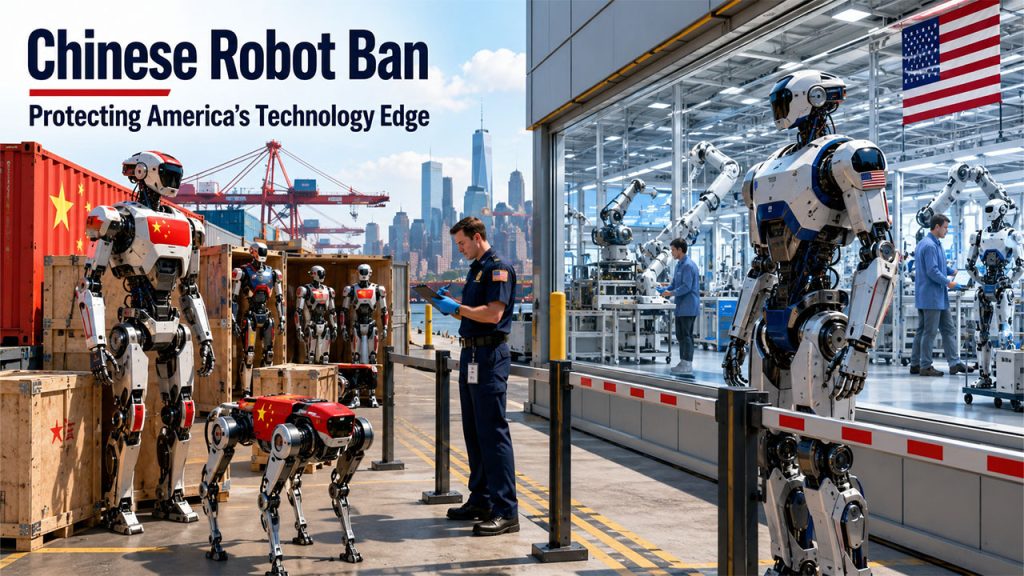
The ban is a part of the broader strategic competition between the USA and China. In the past few years, the U.S. has imposed various restrictions on Chinese products, such as telecom equipment, AI chips, semiconductors, and connected vehicles. Robotics is now seen as another critical technology, and the move aims to reduce reliance on Chinese technology in strategic technology.
Rise of Chinese Robotics
China has rapidly become a global leader in robotics manufacturing, with Chinese companies producing affordable humanoid and quadruped robots, making it attractive to global businesses. The competitive pricing and fast innovation have also helped them to gain market share in industrial and commercial robots.
Protecting Domestic Industry
The move also aims to restrict Chinese robots, encouraging investment in US-based robotics companies. The policy also aligns with broader efforts to build secure and resilient technology supply chains.
What This Means for the Future of AI
The restriction highlights a crucial shift in how the U.S. government views artificial intelligence. For the past decade, AI was mainly focused on software, with large language models, recommendation algorithms, and cloud computing.
However, today AI exists in physical machines. Humanoid robots can inspect factories, move inventories, assist healthcare workers, perform dangerous industrial tasks, and can also interact directly with customers. As businesses increasingly integrate AI-powered technologies into their operations, AI business solutions are becoming essential for improving efficiency, automating workflows, and enabling smarter decision-making across industries.
As AI moves to the physical world, governments are becoming more concerned about who builds the hardware, who controls the software, and where the data are ultimately stored. This makes robotics not just an AI issue, but also a national security issue.
Conclusion
The U.S. ban on Chinese humanoid robots marks a significant shift in the global AI race. With robotics now viewed as a strategic asset, rather than just an emerging technology, the government is placing greater emphasis on security, trusted supply chains, and technological self-reliance. Whether the restrictions strengthen domestic innovation or further deepen the global technology divide, the future of AI will be shaped not only by software and algorithms but also by the intelligent machines that bring them into the physical world.
Frequently Asked Questions :
Why did the U.S. ban Chinese humanoid robots?
The U.S. imposed bans on Chinese humanoid robots mainly due to national security concerns, along with U.S.-China trade and technology tensions.
How can the ban impact U.S. businesses?
Businesses may face higher costs if they need to replace affordable Chinese robots with alternatives.
Will the ban encourage domestic robotics innovation?
Yes, many experts believe the restrictions could boost investment in U.S.-based robotics research, manufacturing, and AI development.
Does the ban apply to all Chinese technology products?
No, the ban specifically targets certain connected robotics systems and power inverters.