

OpenAI has released GPT-6 Astra, its latest flagship AI model built for complex, end-to-end tasks. Unlike models designed mainly for generating text or answering questions, It is built to handle multi-step workflows involving reasoning, coding, research, computer use, and document creation.
The model is available through the OpenAI API and is designed for developers building AI applications that need to work with tools, large amounts of context, and more complicated tasks. Here’s what you need to know about the latest flagship and what makes it different.
What Is GPT-6 Astra?
It is OpenAI’s most capable model for demanding professional and technical work. OpenAI says it is designed to perform strongly in areas such as software engineering, browsing, science, computer use, and professional workflows. For businesses exploring the Top 6 AI Business Solutions, this type of model can support complex tasks that require advanced reasoning and automation. Ai Suites can also help businesses explore practical ways to apply AI across different professional workflows.
The model can carry out multiple steps toward completing a task instead of treating every request as an isolated prompt. For example, an AI application could research information, work with files, use external tools, analyze the results, and produce a final document as part of one workflow.
It also supports different levels of reasoning effort, including low, medium, high, xhigh, and max. This gives developers more control over how much reasoning the model uses for different tasks.
Key Features of GPT-6 Astra

It comes with several capabilities aimed at building more advanced AI applications.
Large context window: The model supports a context window of up to 1,050,000 tokens and can generate up to 128,000 output tokens.
Advanced reasoning: Developers can adjust the reasoning effort depending on how difficult a task is.
Computer use and browsing: Astra can work with computer-based environments and browsing workflows, expanding what AI applications can accomplish beyond text generation.
Tool calling: The model supports tools that allow applications to connect AI reasoning with external actions and information.
Mid-turn steering: Developers can provide additional instructions while Astra is working, allowing an ongoing task to be redirected without necessarily starting from scratch.
Async tool calling: Astra can continue working while external tools are processing, which can be useful for workflows that depend on multiple tool calls.
What Can You Use GPT-6 Astra For?

It is particularly useful when a task involves several connected steps. Developers can use it to build applications for software development, research, data analysis, document creation, and computer-based workflows. These applications can also benefit from the computing infrastructure provided by AI Data Centers, especially when handling complex AI workloads at scale.
For instance, a research application could gather information from different sources, analyze the findings, and prepare a structured report. A coding agent could inspect a project, make changes, run tests, and respond to the results.
This makes this flagship more suitable for AI agents and professional applications that need to complete tasks rather than simply provide answers.
GPT-6 Astra Pricing
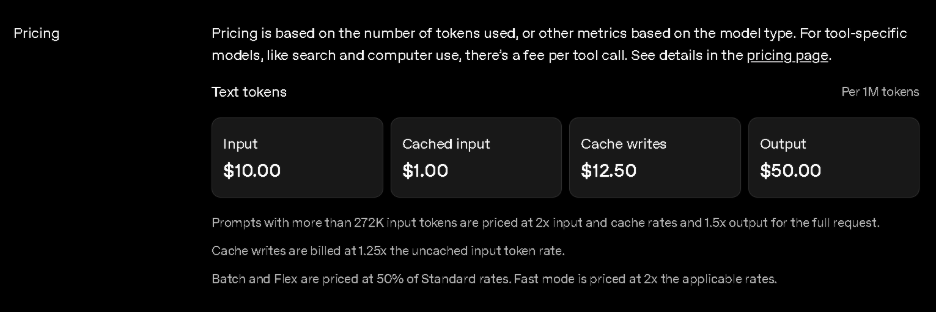
It has a higher per-token price than some of OpenAI’s other models. OpenAI currently lists pricing at $10 per million input tokens and $50 per million output tokens for short context, while long-context pricing is higher.
However, price per token is not the only factor to consider. OpenAI reports that Astra can achieve stronger results while using substantially fewer output tokens on several evaluations, which can reduce the estimated cost of completing some tasks.
Should Developers Switch to GPT-6 Astra?
It makes the most sense for applications that require advanced reasoning, coding, tool use, or long multi-step workflows. Developers working on simpler, high-volume tasks may prefer a less expensive model.
For those migrating an existing application, OpenAI recommends reviewing reasoning settings and API parameters. The model is available through the Responses API, and developers should check the latest migration guidance before moving production workloads.
Conclusion
The launch of GPT-6 Astra signifies further progress towards the development of AI systems with advanced means for handling complex work activities instead of simple tasks. It demonstrates noted improvements in reasoning, context window size, programming, computer usage, accessing the web, and employing tools, allowing users more ways to design AI applications.
It supports active logic and multi-level activities making it applicable to performing specialized work. Nevertheless, not every product is suitable for solving each task meaning that charging and simplicity issues have to be taken into consideration as well.
Frequently Asked Questions :
What is GPT-6 Astra?
It is OpenAI’s latest flagship AI model for complex reasoning, coding, research, computer use, and professional workflows.
What is the context window of GPT-6 Astra?
It supports a context window of up to 1,050,000 tokens and up to 128,000 output tokens.
What can GPT-6 Astra do?
It can support reasoning, software engineering, research, browsing, computer use, document creation, and tool-based workflows.
Is GPT-6 Astra available through the API?
Yes. Developers can access this through the OpenAI API, including the Responses API.